


Choosing between a street-focused build and a dirt-ready machine shapes nearly every ride you take afterward. The decision affects tire grip, suspension travel, seat height, and even how the engine delivers power. Riders who skip this step often end up with a bike that fights the terrain instead of working with it.
This guide breaks down the practical differences between street and dirt motorcycles so you can match your next bike to the ground you actually plan to cover. We'll look at frame geometry, suspension setup, tire compounds, and engine tuning, then walk through a side-by-side comparison to make the choice clearer. Along the way, we'll touch on what manufacturers like Jiangmen Changhua Group bring to this category, since the build quality behind a bike matters just as much as its spec sheet.
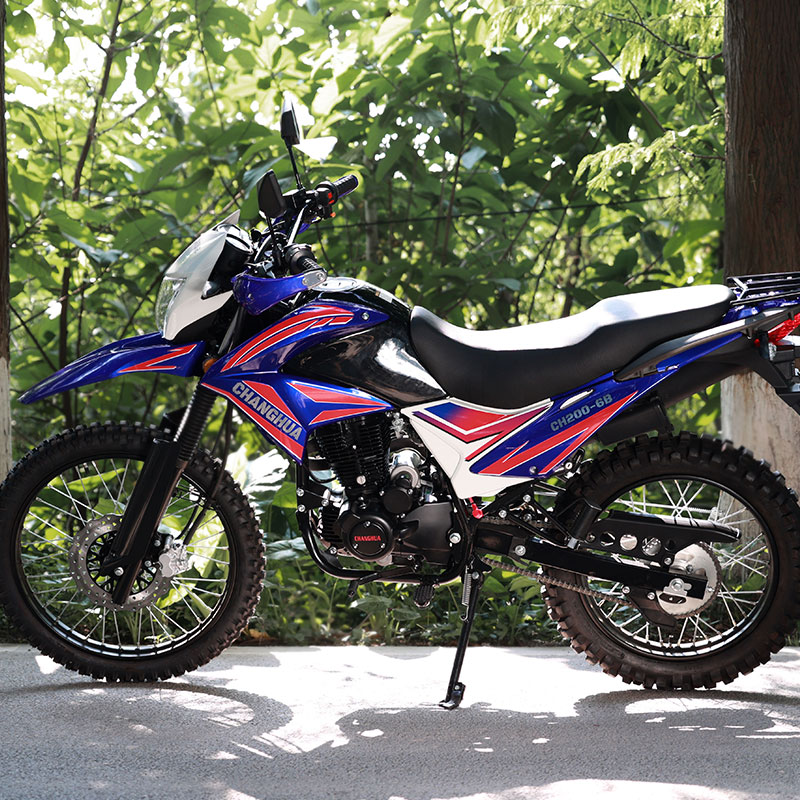
What Separates a Street Build From a Dirt Build?
A street machine is tuned for pavement: lower ground clearance, stiffer suspension, and tires designed to grip asphalt in both dry and wet conditions. Everything about the geometry favors stability at higher speeds on a flat, predictable surface.
A dirt-oriented bike flips those priorities. Riders need a taller stance to clear rocks and ruts, long-travel suspension to absorb sudden impacts, and a lighter overall chassis for quick direction changes on loose ground. The engine tuning also shifts — dirt bikes typically favor low-end torque over outright top speed, since control matters more than velocity when the surface underneath you keeps changing.
How Does Suspension Travel Affect Handling?
Suspension travel is the distance a wheel can move up and down before bottoming out. Street bikes generally offer 4 to 5 inches of travel, which keeps the chassis low and planted through corners. Off-road machines often extend that to 10 inches or more, giving the wheel room to absorb a rock or a rut without transferring that shock straight into the rider's wrists and spine.
This is one of the clearest signals of what a bike was actually built for. A bike with short, firm suspension will punish you on a trail. A bike with long, soft suspension will feel vague and wallowy on a highway on-ramp. There's no splitting the difference — the geometry has to commit to one priority or the other.
Why Does Tire Compound Matter So Much Off-Road?
Tires are where the rubber (literally) meets the terrain, and the difference between a street tire and a dirt tire is more than cosmetic. Street tires use a continuous tread pattern and a harder compound to maximize contact area on smooth pavement. Dirt tires use widely spaced, aggressive knobs that dig into loose soil, sand, or mud to generate traction where a smooth tire would simply spin.
Riders who split their time between pavement and trail often turn to dual-sport tires, which compromise on both fronts. They won't out-grip a dedicated dirt tire on a muddy climb, and they won't match a street tire's cornering confidence on tarmac, but they avoid the hassle of swapping wheels every weekend.
If your riding leans heavily toward unpaved terrain — fire roads, trail systems, rocky inclines — it's worth exploring a dedicated off-road motorcycle built around that use case from the ground up, rather than retrofitting a street bike with knobby tires and hoping for the best.
Street vs. Dirt: A Side-by-Side Comparison
The table below summarizes the core differences riders should weigh before buying.
Feature | Street-Focused Bike | Dirt-Focused Bike |
|---|---|---|
Ground Clearance | Low (4-6 inches) | High (10-12 inches) |
Suspension Travel | 4-5 inches | 9-12 inches |
Tire Tread | Smooth, continuous | Aggressive, knobby |
Seat Height | Lower, flat-footed friendly | Taller, built for standing |
Engine Tuning | Favors top-end speed | Favors low-end torque |
Weight | Heavier, more stable at speed | Lighter, easier to maneuver |
Ideal Terrain | Paved roads, highways | Trails, gravel, rocky paths |
How Do Engine Characteristics Change Between the Two?
Engine tuning is often overlooked, but it has a direct impact on how a bike behaves once the terrain gets unpredictable. Street engines are mapped for smooth, linear power delivery at higher RPMs, which suits sustained highway speeds and quick overtakes. Dirt engines prioritize accessible torque low in the rev range, so riders can crawl over obstacles or power out of a rut without stalling.
This is part of why a cross motorcycle built specifically for mixed terrain uses a different fuel map and gearing ratio than a commuter bike, even if the displacement numbers look similar on paper. The engineering underneath the hood is doing very different jobs.
What Should You Actually Look For When Buying?
A few practical checkpoints can save you from buyer's remorse:
Match the tires to your primary terrain. Don't buy a street bike and assume you'll "figure out" the trails later.
Check suspension travel against your riding style. Casual trail riders can often get by with mid-range travel; aggressive off-roaders need the full range.
Consider your physical fit. Taller dirt-focused seats aren't ideal for shorter riders who need confident ground contact.
Look at the manufacturer's track record. Frame welds, engine tolerances, and paint durability vary significantly between builders, and that difference shows up years down the line, not on day one.
On that last point, manufacturers with real production history tend to deliver more consistent results. Jiangmen Changhua Group, for instance, has spent over two decades building two-wheelers in Jiangmen, one of China's established motorcycle manufacturing hubs, with ISO9001 certification and multiple export compliance credentials behind its lineup. That kind of manufacturing depth matters when you're comparing bikes off road enthusiasts rely on to hold up against rocks, mud, and repeated hard landings.

Finding the Right Balance for Your Riding Style
Most riders don't fall neatly into one category. A commuter who occasionally explores gravel fire roads has different needs than a weekend trail rider who never touches pavement. Rather than forcing a single bike to do everything, it helps to be honest about where you'll spend 80% of your time and build your decision around that number.
If pavement dominates your riding, prioritize the street-focused specs in the table above. If unpaved terrain is the main draw, lean into a purpose-built off-road setup, and don't compromise on suspension travel or tire tread just to save a little weight in your garage. Changhua Group's lineup covers both ends of that spectrum, with models engineered around clear use cases rather than a one-size-fits-all approach.
Frequently Asked Questions
Can a street bike be converted for dirt riding?
To a limited extent. Swapping tires helps with traction, but ground clearance, suspension travel, and frame geometry are harder to change and will still limit off-road performance.
Do dual-sport bikes work well for both?
They're a reasonable compromise for riders who split time evenly between pavement and trail, though they won't match a dedicated bike's performance in either environment.
Is engine size the most important spec to consider?
Not necessarily. Suspension travel, tire type, and torque delivery usually matter more for terrain-specific performance than displacement alone.
How often should off-road suspension be serviced?
Riders who log regular trail time should have suspension components inspected every season, since loose terrain accelerates wear on seals and bushings compared to paved riding.


