


Sourcing the right two-wheeler for your market isn't as simple as picking a popular model and placing an order. Road conditions, fuel availability, customer budgets, and local regulations all play a role in determining which vehicle will actually perform—and sell—once it reaches your customers. For dealers, fleet operators, and distributors, getting this decision wrong means stranded inventory and frustrated buyers.
Jiangmen Changhua Group has spent 25 years building two-wheelers for exactly this kind of decision-making. Founded in 2000 in Jiangmen, China's well-known motorcycle manufacturing hub, the company operates a 45,000 ㎡ facility staffed by nearly 400 employees and ships more than 100,000 units annually to Europe, the Middle East, Africa, South America, and Southeast Asia.
This guide walks through how to match motorcycle styles to specific markets, why engine choice still carries weight, and what separates a dependable manufacturing partner from a risky one.
Why Matching the Vehicle to the Market Matters
A scooter built for smooth city streets won't hold up on a rutted rural road. A heavy-duty off-road bike, meanwhile, is overkill for a commuter who just needs to get across town. Buyers who ignore this mismatch often end up with returns, warranty claims, and dissatisfied end customers.
Three factors tend to drive the decision more than anything else:
Terrain and infrastructure: Paved urban roads support lighter, more fuel-efficient vehicles. Unpaved or poorly maintained roads call for higher ground clearance and tougher suspension.
Charging and fueling access: Markets with reliable electricity grids are better suited to an electric motorbike, while regions with limited charging infrastructure still lean heavily on fuel-powered options.
Use case: Daily commuting, cargo transport, and recreational riding each demand different specifications.
Comparing Motorcycle Styles by Use Case
The table below breaks down the core motorcycle styles Changhua Group manufactures, along with the markets and riders each one serves best.
Category | Best For | Typical Engine/Power | Key Strength |
|---|---|---|---|
Two-Wheeled Motorcycle | Daily commuting | 125cc–250cc | Balanced speed and economy |
Off-Road Motorcycle | Rough terrain | 150cc–250cc | Durability and ground clearance |
Sport Motorcycle | Performance riding | 250cc+ | High speed and handling |
Scooter Motorcycle | Urban travel | 125cc–150cc | Convenience and fuel economy |
Electric Scooter Motorcycle | City commuting | Battery-electric | Low running costs, zero emissions |
Tricycle | Cargo and passengers | Fuel or electric | Load capacity and stability |
A fleet operator running deliveries across uneven roads in Africa will get more value from a rugged tricycle than a sport bike. A young professional navigating Southeast Asian city traffic, on the other hand, is better served by a compact scooter or an electric scooter motorcycle. Stocking a range that spans these motorcycle styles lets dealers meet demand across very different customer segments without overcommitting to a single category.
Gasoline or Electric: Which Engine Fits Your Buyers?
Engine type remains one of the most consequential choices in this market, and there's no universal answer—only the right fit for a given set of conditions.
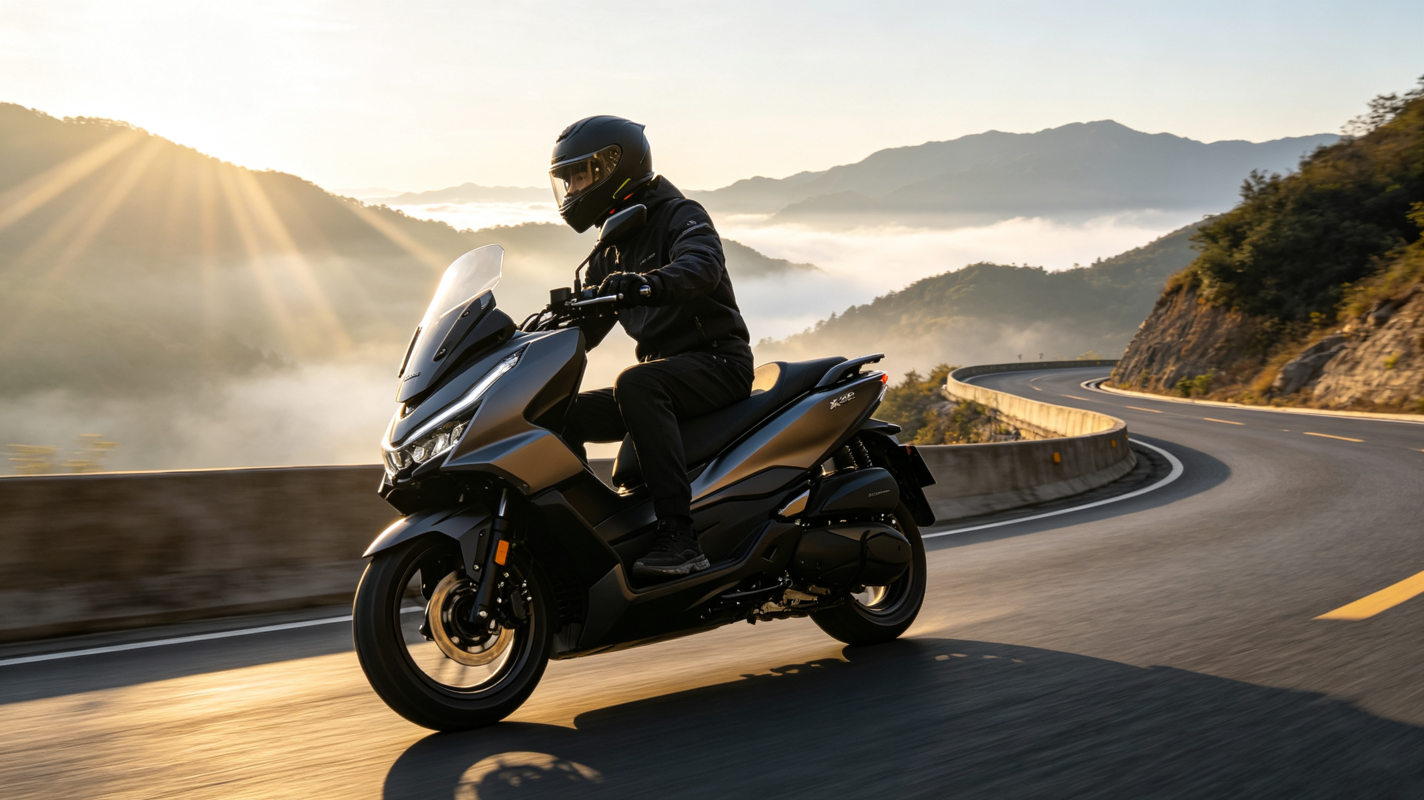
A gasoline scooter motorcycle still makes sense in regions where charging stations are scarce and riders need to refuel quickly and keep moving. These models offer long range, fast turnaround, and a maintenance process that's familiar to mechanics across export markets. Changhua Group builds its scooter lineup on ISO9001-certified production lines specifically to meet the demanding conditions found across Africa and the Middle East, where reliability can't be an afterthought.
The electric motorbike makes the strongest case in dense urban centers with dependable power access. Lower fuel costs, reduced noise, and simpler maintenance routines appeal to city riders who prioritize total cost of ownership over long-distance range. As battery technology and charging networks continue to expand, electric models are capturing a growing share of urban fleets and personal commuter sales alike.
Choose a gasoline scooter motorcycle if your market has limited charging infrastructure and riders need to travel long distances without stopping to recharge.
Choose an electric motorbike if your buyers are concentrated in cities with reliable electricity and value lower running costs over raw range.
What to Look for in a Manufacturing Partner
Picking the right vehicle only solves half the problem. The factory producing it determines whether that vehicle will actually meet regional regulations, arrive on schedule, and hold up to years of real-world use.
Buyers evaluating a manufacturer should look for:
Certifications: ISO9001, 3C, GCC, and E-MARK certifications signal that a factory follows internationally recognized quality and safety standards.
Technical depth: A manufacturer backed by senior engineers and a strong patent portfolio is better positioned to solve problems specific to your region's roads and climate.
Production scale: Multiple production lines and warehouse capacity allow a factory to support flexible OEM and ODM orders without sacrificing consistency.
Export track record: A manufacturer with established experience shipping to your region understands the paperwork, regulations, and logistics involved.
Changhua Group checks each of these boxes, holding ISO9001, 3C, GCC, and E-MARK certifications alongside more than 30 patents. Its team includes over 60 senior technical engineers, and its factory runs multiple production lines supported by several large warehouses—giving the company the flexibility to handle both standard orders and custom OEM/ODM requests at scale.
Building a Product Lineup That Matches Your Market
There's no single "best" motorcycle style—only the style that best fits a given rider, road, and budget. Urban markets with reliable power infrastructure are strong candidates for electric expansion. Regions with rougher terrain and limited charging access will likely continue to rely on gasoline-powered models for years to come.
The smartest move for dealers and fleet operators is building a lineup that spans both ends of this spectrum, backed by a manufacturer capable of delivering consistent quality across every category. With 25 years of manufacturing experience and an export network spanning five continents, Changhua Group offers exactly that range.
Ready to source motorcycles built for your market's specific conditions? Complete our quick inquiry form and receive a competitive quote within 24 hours.


