


Three wheels have always carried more than their fair share of the world's work. From narrow rural lanes in Southeast Asia to bustling urban delivery corridors in Africa and Latin America, the motor tricycle has quietly become one of the most versatile and practical vehicles on the planet. Affordable to buy, easy to maintain, and built to carry—these machines solve real problems for real people.
This article breaks down how motor tricycles work, what sets different types apart, and why Jiangmen Changhua Group Co., Ltd. has become a trusted manufacturer for buyers worldwide.
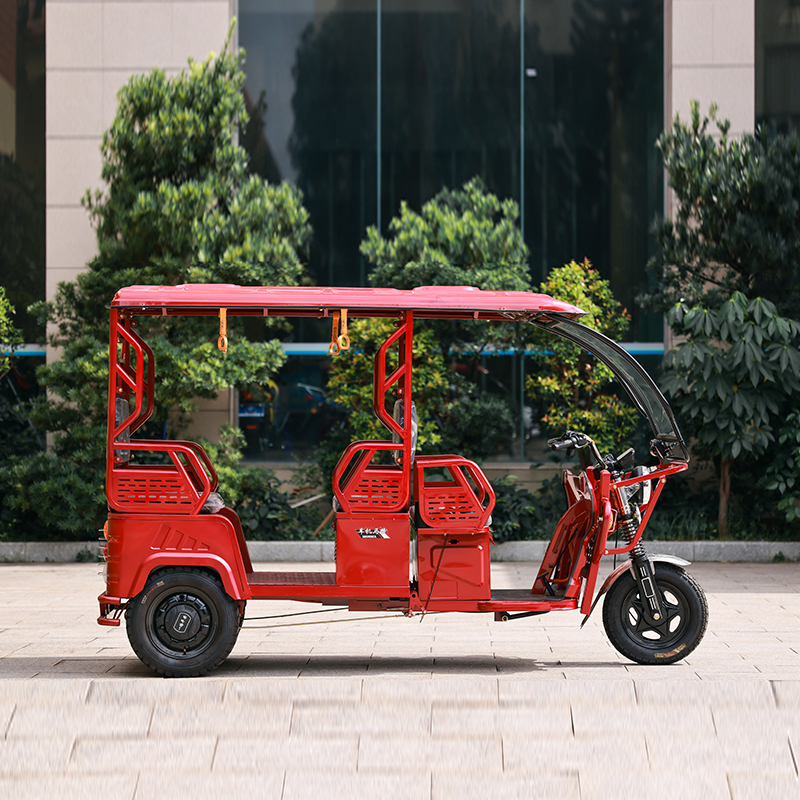
What Makes a Motor Tricycle Different from a Standard Motorcycle
A motor tricycle is a three-wheeled motorized vehicle designed to carry either passengers, cargo, or both. Unlike a standard two-wheeled motorcycle, it offers a stable platform that doesn't require the rider to balance at low speeds or when stationary. That stability makes a significant difference in demanding commercial environments—think steep hillside villages, unpaved market roads, or urban delivery routes with constant stop-and-start traffic.
Most motor tricycles are powered by gasoline engines ranging from 150cc to 300cc, though electric variants are increasingly common. The rear axle supports either an enclosed passenger cabin, a flatbed cargo deck, or a hybrid configuration depending on the intended use.
The Two Main Types and How They Compare
Buyers typically choose between two configurations. The table below outlines the key differences:
Feature | Passenger Type | Cargo Type |
|---|---|---|
Primary use | Transporting people | Hauling goods and materials |
Seating capacity | 2–6 passengers | Driver only (or 1 passenger) |
Rear structure | Enclosed or open cabin | Flatbed, box, or tipper bed |
Load capacity | Low to medium | Medium to high (up to 1,000+ kg) |
Common markets | South/Southeast Asia, Africa | Agriculture, construction, logistics |
Engine range | 150cc–200cc | 200cc–300cc |
Suspension setup | Comfort-focused | Heavy-duty reinforced |
Both configurations share the same basic drivetrain and frame logic, which is one reason they're so easy to service in markets where spare parts availability matters more than dealer networks.
Passenger Tricycles Serve Communities That Two-Wheelers Can't
The passenger tricycle fills a gap that neither motorbikes nor cars adequately address in many developing markets. A motorbike carries one or two people at most. A car is often unaffordable and impractical on unpaved roads. The passenger tricycle, by contrast, can carry a family, a group of market vendors, or a small village's worth of commuters—at a fraction of the operating cost of a conventional vehicle.
In the Philippines, they're known as tricycles and serve as the primary form of public transport in countless municipalities. In parts of West Africa, similar vehicles operate as shared taxis. Across South Asia, auto-rickshaw-style variants dominate urban short-haul transport. The design adapts to local needs, which is why demand remains consistently high across such diverse markets.
Changhua Group produces passenger-configured models suited to these environments, building them with reinforced frames, reliable single-cylinder engines, and cabin designs that can be adapted for local preferences. The company's production facility in Jiangmen, Guangdong Province covers 45,000 square meters and operates multiple assembly lines—capacity that allows for both standard models and customized configurations.
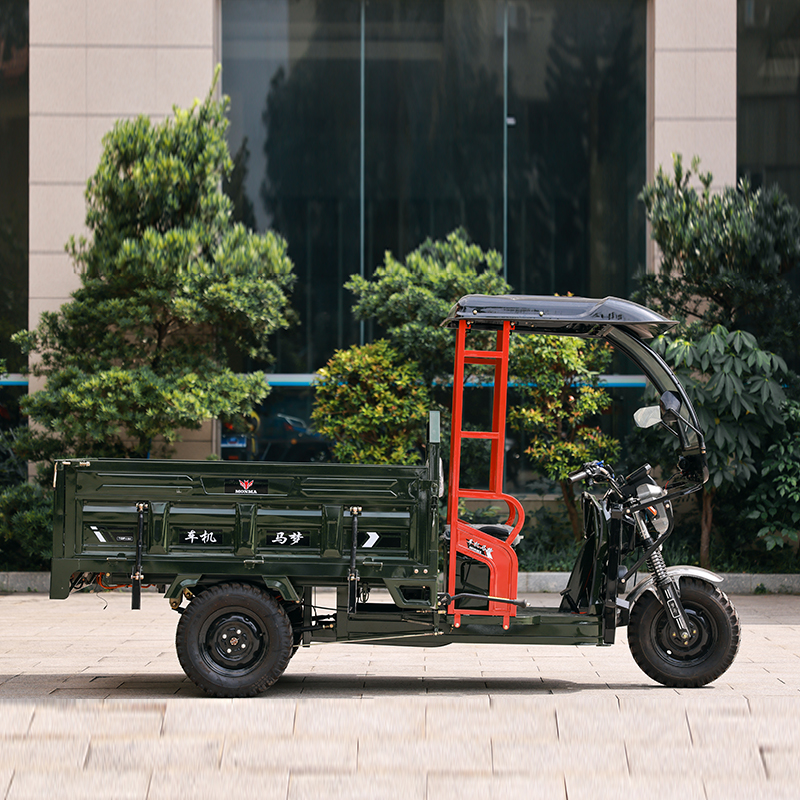
Cargo Tricycles Keep Supply Chains Moving at the Last Mile
Logistics networks around the world face a consistent challenge: getting goods from a distribution point to their final destination, often across terrain that large trucks simply cannot navigate. The cargo tricycle addresses this directly.
Farms use them to transport harvested produce from field to roadside. Construction sites rely on them for moving sand, gravel, and building materials across uneven ground. Small businesses load them with stock for daily market routes. Their turning radius is tighter than any truck, their maintenance cost is lower than any van, and their purchase price is accessible even for small operators working on thin margins.
Key attributes that make cargo variants effective in commercial use include:
High load capacity: Reinforced rear axles support heavy payloads without compromising drivetrain longevity
Engine torque: Higher-displacement engines (often 200cc–300cc) deliver the pulling power needed on inclines
Deck flexibility: Flatbed, enclosed box, tipper, and refrigerated configurations are all available depending on the cargo type
Fuel efficiency: Even under load, well-tuned engines keep operating costs manageable for daily commercial use
Changhua Group's cargo-configured tricycles are exported to markets across Africa, the Middle East, South America, and Southeast Asia—regions where this vehicle category plays a critical economic role. The company holds ISO9001 Quality Management System Certification, CCC Certification, and GCC Certification, among others, which gives international buyers a verifiable quality baseline before placing orders.
Why Sourcing from Changhua Group Makes Commercial Sense
Founded in 2000 and headquartered in Jiangmen—a city with deep roots in motorcycle and tricycle manufacturing—Jiangmen Changhua Group Co., Ltd. has spent over two decades building both products and partnerships. Annual sales exceed 100,000 units. The engineering team includes more than 60 senior technical engineers, and the company holds over 30 patents.
For distributors, fleet operators, and importers evaluating suppliers, a few factors matter most:
Consistent production capacity: Multiple assembly lines and large warehouse facilities ensure order timelines are met
Certification portfolio: ISO9001, CCC, GCC, E-MARK, and EEC certifications cover the regulatory requirements of most major export markets
OEM/ODM capability: Custom configurations, branding, and specifications are supported for buyers with specific market requirements
Direct communication: The sales team responds to inquiries within 24 hours and provides competitive quotes with full specification sheets
These are not minor operational details—they're the difference between a supplier relationship that works and one that creates constant friction.
Motor Tricycles Remain One of the Most Practical Vehicles in Global Commerce
The three-wheeled motor vehicle occupies a unique position: too capable to be dismissed as a basic transport tool, too practical to be replaced by more complex alternatives. Passenger and cargo variants both serve essential functions in economies where reliability, low cost, and adaptability determine which vehicles actually get used.
For buyers looking to source tricycles at scale, Changhua Group offers a combination of manufacturing depth, certification credibility, and export experience that is difficult to match. Visit jmchmotor.com to explore the current tricycle range, or contact the team directly to discuss specifications and pricing.


