


Sourcing motorcycles for international markets is rarely a simple transaction. Buyers need consistent quality, competitive pricing, and a manufacturing partner who understands the regulatory demands of different regions. For fleet operators, dealers, and distributors weighing their options, the choice of factory often determines whether a shipment arrives on time and performs as promised for years afterward.
China has become the world's leading hub for two-wheeler production, and for good reason. Decades of manufacturing experience, established supply chains, and a workforce skilled in both engineering and quality control have turned the country into the default sourcing destination for motorcycles sold across Europe, Africa, the Middle East, South America, and Southeast Asia. But not every factory operates at the same standard, and buyers who skip due diligence often pay for it later in warranty claims and shipping delays.
This article breaks down what separates a dependable manufacturing partner from the rest, what buyers should expect in terms of certifications and production scale, and how sourcing decisions differ depending on the type of motorcycle being ordered.
What Sets a Trustworthy Manufacturing Partner Apart
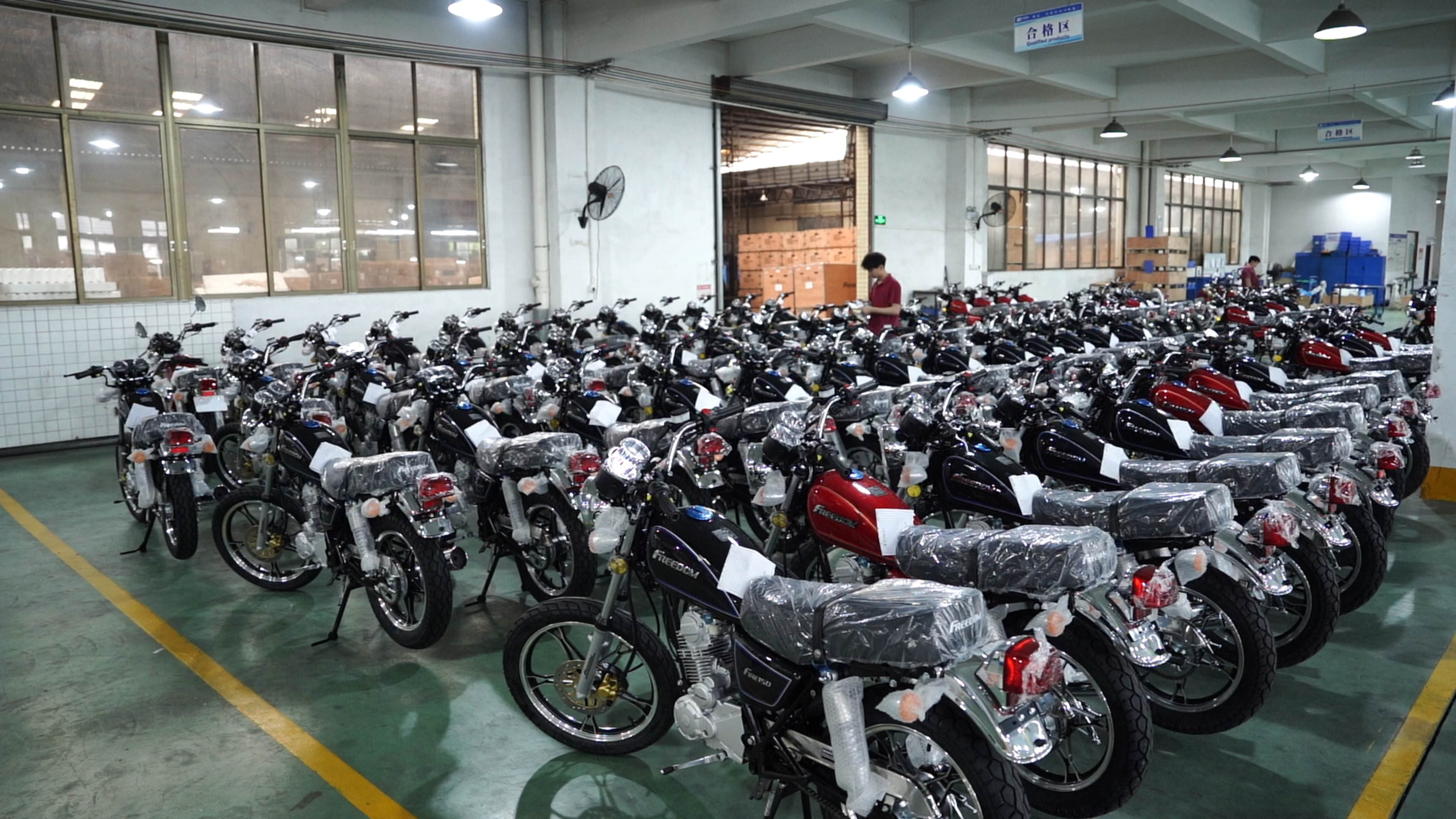
Not every factory advertising itself as an export-ready producer actually has the infrastructure to back it up. A genuine Chinese motorcycle factory typically operates from a large, purpose-built facility with multiple assembly lines rather than a single small workshop. Scale matters here—it's the difference between a supplier who can fulfill a container order on schedule and one who struggles to meet a deadline once volume increases.
Jiangmen Changhua Group Co., Ltd., founded in 2000 and based in Guangdong Province, illustrates what this looks like in practice. The company operates from a 45,000-square-meter facility with a 50,000-square-meter construction area, employing nearly 400 staff, half of whom hold a college degree or higher. That combination of physical capacity and technical staffing supports annual production exceeding 100,000 units, with sales surpassing 500 million yuan per year.
Certifications are another non-negotiable factor. Buyers should look for ISO9001 quality management certification, "3C" certification, GCC certification for Gulf markets, and E-MARK certification for European compliance. These aren't just paperwork exercises—they reflect whether a factory's production processes are consistently audited and documented, which directly affects how smoothly a shipment clears customs in the destination country.
Why Production Scale and R&D Investment Matter
A factory's patent portfolio and engineering staff often reveal more about long-term reliability than its marketing materials do. More than 30 patents and over 60 senior technical engineers on staff, for example, signal a manufacturer that invests in product development rather than simply assembling parts sourced from elsewhere. This kind of investment tends to show up in smaller details—tighter tolerances, better fuel efficiency, and fewer warranty issues after the sale.
Matching the Right Motorcycle Type to Your Market
Different markets demand different product categories, and this is where sourcing decisions get more specific. A distributor serving rural transport needs in Africa has very different requirements than a dealer targeting urban commuters in Southeast Asia or a retailer catering to recreational riders in Europe.
Buyers targeting performance-focused customers often look for a wholesale price sport motorcycle producer capable of delivering competitive per-unit costs without cutting corners on engine reliability or braking systems. Sport models generally carry higher margins than standard commuter bikes, but they also require tighter quality control since riders push these machines harder and expect more from the components.
Meanwhile, buyers focused on utility and daily transport tend to prioritize durability and low maintenance costs over speed. Off-road models, scooters, and tricycles each serve distinct use cases, from passenger transport to cargo hauling, and a manufacturer offering a full product matrix gives buyers more flexibility to diversify their catalog without adding new supplier relationships.
Comparing Common Motorcycle Categories for Export
Category | Typical Use Case | Key Buyer Priority |
|---|---|---|
Two-Wheeled Motorcycle | Daily commuting, general transport | Fuel efficiency, low maintenance |
Off-Road Motorcycle | Rugged terrain, rural access | Durability, ground clearance |
Sport Motorcycle | Performance riding, younger buyers | Power, styling, braking quality |
Scooter | Urban short-distance travel | Ease of use, storage space |
Electric Scooter | Eco-conscious urban riders | Battery range, charging time |
Tricycle | Cargo and passenger hauling | Load capacity, stability |
This kind of category breakdown helps buyers narrow down which product lines are worth prioritizing based on the demand patterns in their target market, rather than ordering a broad mix and hoping for the best.
What to Verify Before Signing a Contract
Once a buyer has shortlisted potential suppliers, a few practical checks can prevent costly mistakes down the line. First, confirm that the certifications listed on the supplier's website match documentation provided in the contract—some companies list certifications they no longer hold current registration for. Second, ask about minimum order quantities and whether OEM or ODM customization is available, since branding requirements vary significantly by market. Third, request references from existing buyers in a similar region, since compliance requirements in the Middle East differ from those in South America.
Buyers evaluating options among established motorcycle manufacturers in china should also pay attention to export history. A company that has shipped consistently to multiple continents for over a decade has typically already solved the logistical and regulatory hurdles that a newer exporter might still be navigating. This experience translates into fewer surprises once a purchase order is placed.

Building a Sourcing Relationship That Lasts
Choosing a manufacturing partner isn't a one-time transaction—it's the foundation of a business relationship that can span years of repeat orders. Factories with established quality systems, deep product lines, and export experience across Europe, the Middle East, Africa, South America, and Southeast Asia tend to offer more stability than smaller operations still building their reputation.
For buyers ready to move forward, the next step is straightforward: request product catalogs, compare certifications side by side, and ask detailed questions about production capacity before committing to a purchase order. A manufacturer confident in its own quality standards will typically welcome that level of scrutiny.
Frequently Asked Questions
What certifications should a motorcycle export supplier hold?
Look for ISO9001 quality management certification, "3C" certification for the Chinese domestic market, GCC certification for Gulf Cooperation Council countries, and E-MARK certification for European compliance. These confirm the manufacturer meets recognized safety and quality standards.
How does production scale affect delivery reliability?
Factories with multiple assembly lines and large facilities can typically absorb bulk orders without missing shipment deadlines, while smaller operations may struggle once order volume increases beyond their standard capacity.
Can motorcycle manufacturers customize branding for overseas buyers?
Many established manufacturers offer OEM and ODM services, allowing buyers to apply their own branding, colors, and minor specification changes to standard product lines. Availability varies by supplier, so this should be confirmed before finalizing an order.
Which motorcycle category has the strongest export demand?
Demand varies by region. Rural and developing markets often favor durable, low-maintenance commuter and cargo models, while urban and recreational markets show stronger demand for scooters and sport motorcycles.


